Can You Print Double-Sided? Maximize Large Format Printing
Double-sided large format printing is possible and often the most effective way to maximize visibility at events, in windows, and on hanging displays. Here is what you need to know.
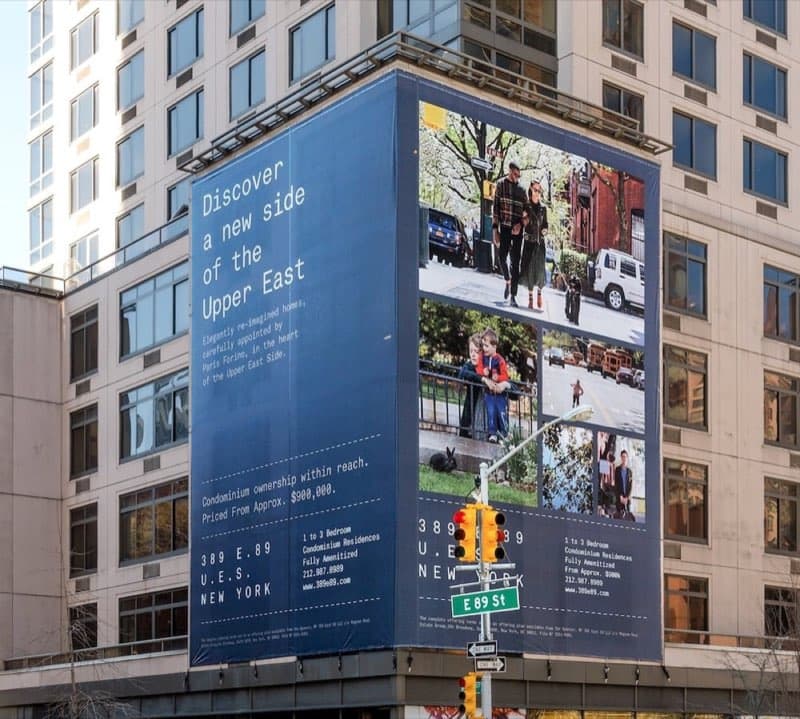
Double-Sided Large Format Printing: What's Possible
Yes — at VSL Print we regularly produce double-sided large format prints for banners, hanging displays, window graphics, and trade show pieces. Double-sided printing maximizes the value of your display by ensuring visibility from both directions, which is essential for banners hung over streets, signs placed in windows, displays suspended from ceilings, and booth graphics at events with traffic flowing in multiple directions. Street-facing retail drives much of this demand, and double-sided window graphics make up a good share of the printing for Brooklyn businesses we produce each month.
Methods for Double-Sided Large Format Printing
Two-Sided Direct Print
Some large format substrates can be printed on both sides directly. Polypropylene banner material and certain rigid boards can receive ink on their front and back faces. The challenge is alignment: the back must be a mirror image of the front, precisely registered so that elements line up when viewed from either direction. We achieve this through careful registration jigs and proofing before the full run.
Blockout Banner Material
Standard vinyl banner material is semi-transparent — printing on the back would be visible through the front, creating a ghost image. Blockout banner material has an opaque dark or white inner layer that prevents light and ink from bleeding through. This allows independent designs on each face without any bleed-through interference. Blockout is the standard choice for street-spanning banners, event hanging banners, and any application where each face needs to be viewed independently.
Back-to-Back Lamination
For premium double-sided displays — particularly fabric tension displays and trade show graphics — two separately printed pieces are produced and then laminated back-to-back with a blockout layer between them. This approach allows each face to be color-optimized independently and is the most common method for high-end double-sided fabric banners.
Double-Sided Window Vinyl
Window vinyl can be ordered with a white or silver backing that makes the print visible from the exterior while the window remains usable from the inside. For interior-facing messaging, a second print layer or a separate perforated vinyl application can provide inside-facing content.
Design Considerations for Double-Sided Prints
Designing for double-sided large format requires a few important considerations:
- Mirror image for back face: The back face design should typically be a horizontal mirror of the front so that it reads correctly when viewed from the opposite direction. Confirm with your printer whether mirroring is applied during production or must be done in the file.
- Bleed on both sides: Both the front and back designs need correct bleed — usually 0.5"–1" — to account for any slight shift during lamination or hemming.
- Consistent visual weight: If the two faces will be visible simultaneously (as in a suspended banner), ensure they are visually balanced so the display does not look heavier on one side from a distance.
- Pole pocket and grommet placement: Finishing hardware must work for both orientations. Specify which face is the "primary" face so we can orient grommets and pockets correctly.
Common Applications for Double-Sided Large Format
Double-sided printing earns its cost in any setting where viewers approach from more than one direction. The most common applications we produce include:
- Street-spanning and pole banners — seen by traffic and pedestrians moving in both directions, these almost always use blockout material so each face reads independently
- Ceiling-hung retail and event banners — suspended in open space where shoppers or attendees circulate on all sides
- Window graphics — an exterior promotional message paired with interior-facing content, achieved with backed or layered vinyl
- Trade show hanging signs — the large overhead structures that identify a booth from across a hall, viewed from every aisle
- Sidewalk and A-frame signage — rigid double-sided panels that catch foot traffic coming and going
In each case, the value is the same: you double the audience for one piece of hardware without doubling the footprint. Many of these formats overlap with our broader work in custom sign printing, covered in its own guide.
Avoiding Bleed-Through and Ghosting
The technical heart of good double-sided work is preventing the front design from showing through to the back, or vice versa. Standard single-ply banner vinyl is translucent, so light passing through it carries a faint reverse image — the "ghosting" that ruins cheap double-sided attempts. The two reliable solutions are a true blockout material with an opaque core, or back-to-back lamination with an opaque layer sandwiched between two separately printed faces. The right choice depends on whether the piece will be backlit or front-lit, how it is hung, and how premium the finish needs to be. We will recommend the construction based on your lighting and display conditions, because a banner lit from behind has very different requirements than one viewed in reflected light.
Frequently Asked Questions
Do both sides have to use the same design? No. With blockout or back-to-back construction each face is independent, so you can run identical artwork, mirrored artwork, or entirely different content on each side.
Does the back need to be mirrored in my file? Usually the back face should read correctly from the opposite direction. Confirm with us whether mirroring is applied during production or needs to be set in your file, so text never ends up reversed.
Is double-sided always more expensive? It typically runs about 1.5 to 2 times a single-sided equivalent because of the extra ink, material, and finishing, but for a piece seen from two directions it is far cheaper than producing and hanging two separate displays.
Finishing and Hardware for Double-Sided Displays
Double-sided pieces add a layer of finishing decisions that single-sided graphics do not. Because both faces are visible, the placement of grommets, pole pockets, hems, and mounting hardware has to work from either direction, and it must not interrupt the design on either side. For a hanging banner seen on all sides, hardware is typically positioned at the top and bottom edges where it reads cleanly from both faces. For rigid double-sided signage, the frame or base needs to support the panel without obscuring content. We ask clients to designate a "primary" face so we can orient finishing consistently, and we confirm hardware placement on the proof before production. Getting this right ensures the display hangs straight, reads correctly from every angle, and survives repeated setup if it travels.
Lighting Considerations for Two-Sided Pieces
How a double-sided graphic is lit changes both the material choice and the design. A backlit hanging sign needs a blockout or opaque construction so the two faces do not bleed into each other when light passes through; a front-lit banner in reflected daylight has more latitude. If one face will be brightly lit and the other in shadow, balancing the visual weight of the two designs keeps the piece from looking lopsided from a distance. Telling us the lighting environment up front lets us recommend the construction and finish that will look intentional in the space rather than fighting it.
Pricing and Turnaround
Double-sided large format prints are roughly 1.5–2x the cost of single-sided equivalents, depending on the substrate and method. Back-to-back laminated fabric displays carry a higher per-unit cost but offer superior quality for repeated use. Standard double-sided blockout vinyl banners can be produced in 1–2 business days; fabric back-to-back displays typically require 2–3 days.
Get a Double-Sided Large Format Quote
Tell us your display dimensions, the application (hanging, window, outdoor), and whether you need the same design or different content on each face. Our large format team will recommend the most appropriate substrate and method. Call VSL Print at 646-843-0800 or submit a quote request online with your specifications.
Looking for professional large format printing?
View Large Format PrintingReady to start your print project?
Get a free quote from a NYC commercial printer. Rush turnaround available.