Perfect Binding · NYC Perfect Bindery
Perfect Binding NYC
Perfect bind printing. Perfectly done.
Flat spine, professional finish. VSL Print's in-house perfect bindery produces catalogs, magazines, and paperbacks with fast turnaround in Midtown Manhattan.
NYC's perfect bindery for catalogs, books, and magazines.
Perfect binding is the publishing industry standard for paperbacks, trade catalogs, and magazines—and for good reason. The flat, square spine is printable, stackable, and immediately recognizable as a professional publication. It's clean, it's structural, and it scales from 50 copies to 50,000.
At VSL Print, our perfect bindery operates entirely in-house at our Midtown Manhattan facility. We run the printing, laminating, and binding under one roof, which means your perfect bind printing project moves faster and with tighter quality control than if we sent it to an outside bindery.
Whether you need 50 catalogs for a showroom opening or 5,000 magazines for a national distribution run, we have the capacity, the equipment, and the expertise to deliver. Larger quantities move onto offset lithography, where the unit cost keeps dropping as the run gets longer.
The technique earns its name from the result rather than the process. A perfect bound book opens to a clean, flush block of pages held by a flexible adhesive spine, with no visible staples, stitching, or rings. That square edge is what makes the format printable: your title, author, and issue number can run vertically down the spine so the book is identifiable on a shelf, in a slipcase, or stacked on a retail counter. For NYC brands producing seasonal catalogs, gallery monographs, trade journals, and corporate publications, it is the most cost-effective way to bind anything from roughly an eighth of an inch up to about two inches of thickness. Seasonal programs often begin with our catalog printing and design team so layout, stock, and binding are planned together.
What we perfect bind
Perfect binding works across a wide range of publication types.
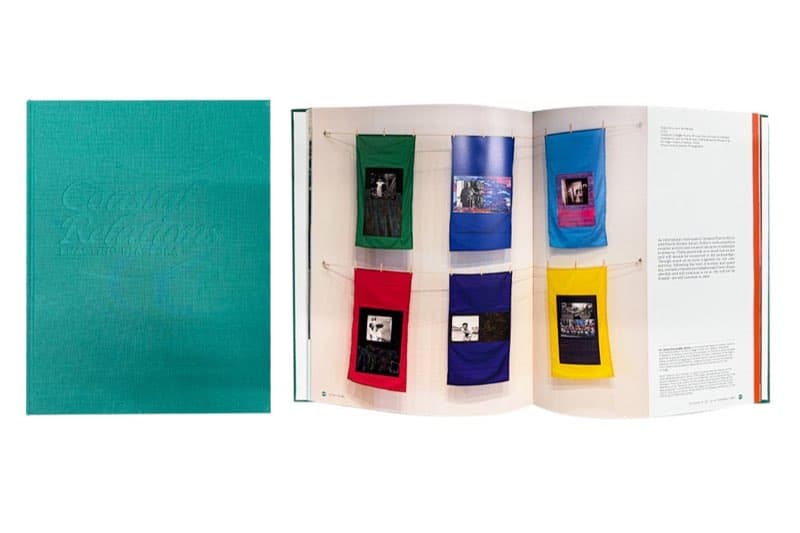
Catalogs & Lookbooks
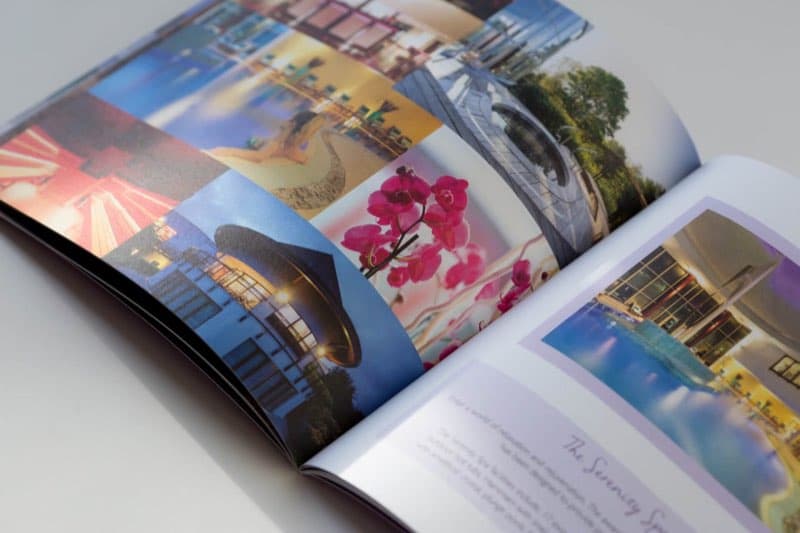
Perfect binding is the definitive choice for product catalogs. The flat spine allows for clean title printing, and the square profile looks polished on desks and retail displays.
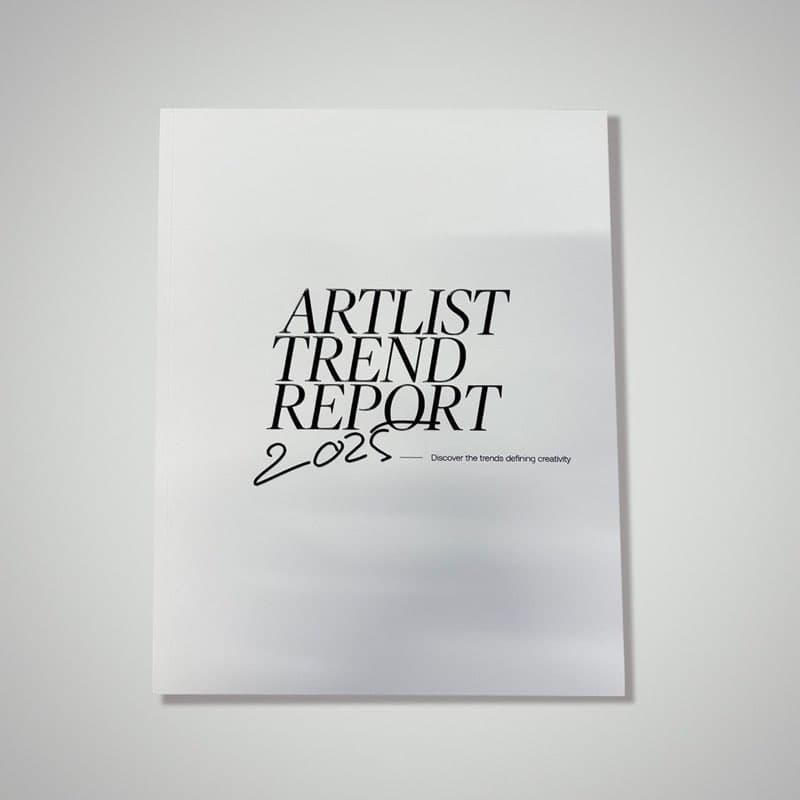
Magazines & Periodicals
From quarterly trade publications to annual magazines, perfect binding gives your publication a newsstand-ready look with a spine that can carry your title and issue number.
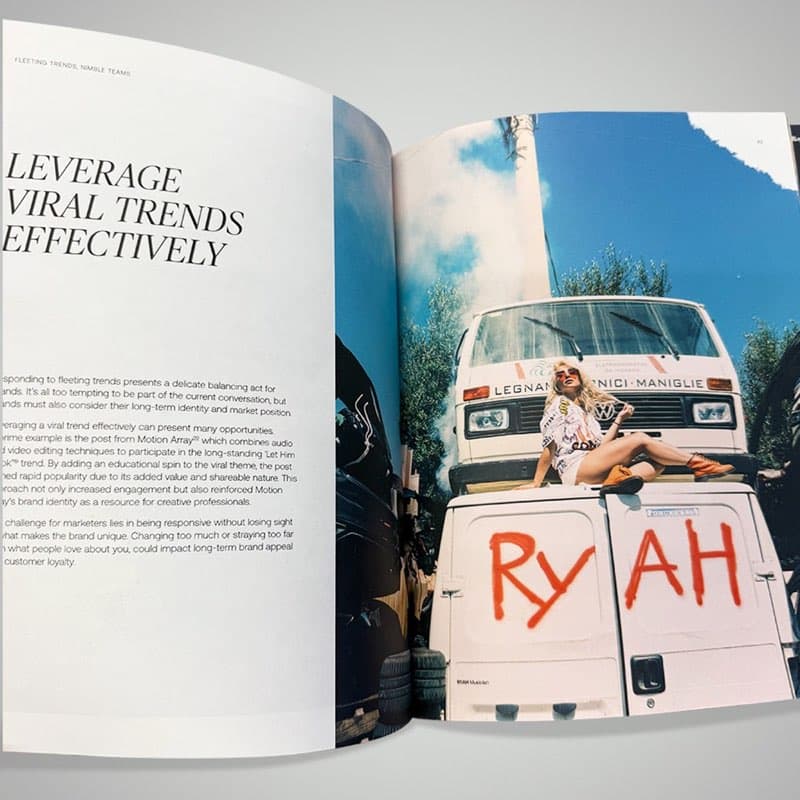
Paperback Books
Trade paperbacks, how-to guides, academic texts, and company books all use perfect binding. The adhesive spine holds reliably through thousands of page-turns.
Annual Reports
Annual reports demand a professional finish that reflects your brand. Perfect binding with a matte or soft-touch laminated cover delivers that authoritative look.
How perfect binding works
Five production steps that turn loose pages into a finished perfect bound book.
01
Print & Prep
Interior pages are printed on your chosen text stock and cut to the final trim size. Covers are printed separately on heavier cover stock.
02
Spine Milling
The spine edges of the collated pages are milled to create a slightly roughened surface, which maximizes adhesive grip and binding strength.
03
Adhesive Application
Hot-melt adhesive is applied to the milled spine. This industrial-grade glue creates a strong, flexible bond between the text block and the cover wrap.
04
Cover Attachment
The pre-laminated cover wrap is pressed and scored around the spine, front, and back. The book is then trimmed on three sides to final dimensions.
05
Quality Check
Every bound book is inspected for cover adhesion, spine squareness, and trim accuracy before leaving our bindery.
Choosing stock, ink, and finishes
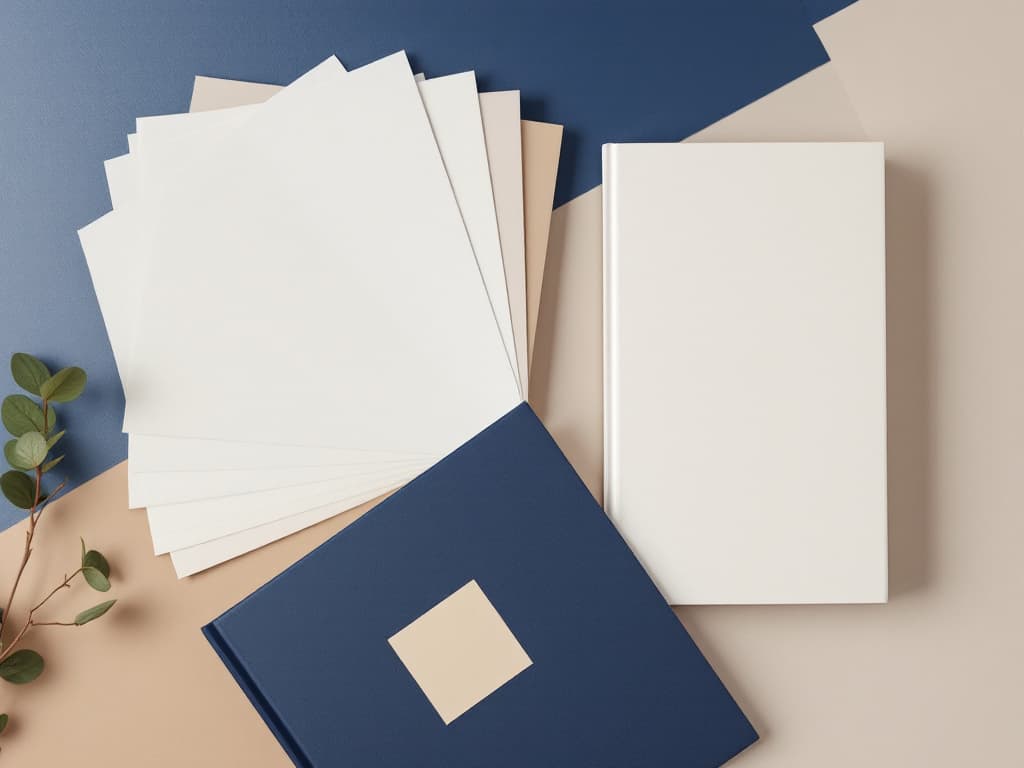
The right paper does most of the work in a perfect bound book. For interiors, a 70lb or 80lb coated text is the workhorse for catalogs and magazines—it holds halftone detail, keeps the page count manageable, and lies flat against the spine. Uncoated text from 50lb to 70lb is the move for novels, guides, and anything read at length, because it cuts glare and takes a pen. Heavier 100lb gloss or matte text gives annual reports and lookbooks a substantial, premium hand-feel without pushing the spine past what the adhesive can hold.
Covers carry the brand, so they get heavier 80lb or 100lb cover stock and a protective finish almost every time. Gloss lamination makes photography snap and resists scuffing; matte lamination reads as understated and editorial; soft-touch matte adds a suede-like texture that NYC fashion and design clients gravitate toward. Aqueous coating is a lower-cost in-line option, while spot UV and foil stamping let a logo or title catch the light against a flat background. We laminate covers in-house before binding, which keeps the wrap from cracking when it scores around the spine.
For ink, our G7-calibrated presses hold neutral grays and consistent color across long runs and reprints, so a catalog ordered this quarter matches the one you ran last season. CMYK covers the vast majority of work; we also run spot colors for exact brand matches on logos and solids.
File prep matters most at the spine. Build interior pages as single pages, not spreads, and let us impose them for binding. Keep critical text and logos at least a quarter inch clear of the spine edge, because the glue and the natural curve of a perfect bound page reduce how far the book opens into the gutter. Supply a press-ready PDF/X file with 0.125" bleed on all outside edges, images at 300 DPI, and fonts embedded or outlined. For the cover, send a single flat spread—back cover, spine, front cover—and tell us the page count and stock so we can calculate exact spine width. If you are not sure, send the interior file first and we will give you a spine measurement before you finalize the cover art.
Perfect binding specifications
Perfect binding vs. other methods
Below about 28 pages, saddle stitch (folded and stapled) is cheaper and lies flatter. For documents that must open completely flat—training manuals, music, lab notebooks—spiral or Wire-O binding is the better fit. When a project needs a rigid board cover and maximum shelf life, step up to hardcover (case) binding. Perfect binding sits in the middle: a polished, printable spine at a soft-cover price, ideal for 28 to 300-plus pages.
Fast
Binding turnaround
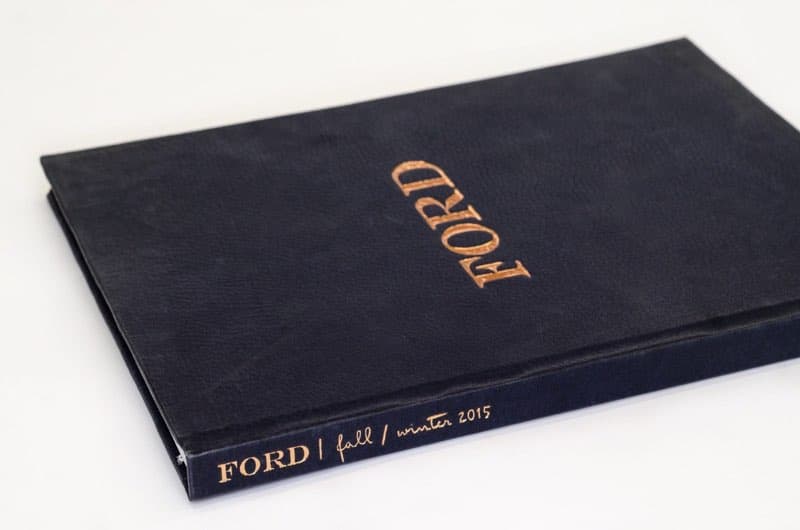
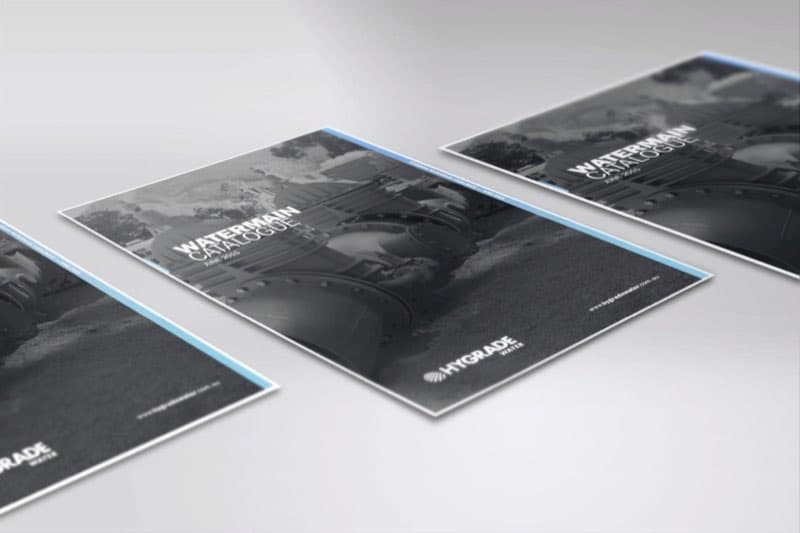
Perfect binding portfolio
Catalogs, books, and publications produced at our Manhattan perfect bindery.
Why our perfect bindery is different
Most print shops send perfect binding out. We don't. Our in-house perfect binding line means we control your project from the first print sheet to the final trimmed book—with no third-party delays and no quality gaps between printer and binder.
- In-house perfect binding line — no outsourcing
- High-speed production for large catalogs and book runs
- Gloss, matte, and soft-touch laminated covers
- Spot UV and foil stamping on covers
- Trim sizes from 4×6 to 12×12 and custom
- Short runs from 25 copies — no high minimums
- Print-and-bind under one roof for tight turnarounds
- Quality inspection at every production stage
Perfect binding gathers pages, roughens the spine edge, and applies hot-melt adhesive before attaching a cover wrap. The result is a flat, square spine—the standard for paperbacks, catalogs, and magazines.
We recommend a minimum of 28 pages (7 sheets printed on both sides). Thinner publications are better suited for saddle stitch.
Most coated and uncoated sheets from 50lb through 100lb text work well. Covers use 80–100lb cover stock. We advise on stock selection during quoting.
After printing, perfect binding adds a finishing pass that we schedule with your quote. Rush options are available—call 646-843-0800 to confirm scheduling.
Yes. Bring or ship your collated pages to our Midtown Manhattan facility and we'll handle cover printing, laminating, and perfect binding.
Gloss lamination, matte lamination, soft-touch matte, aqueous coating, spot UV, and foil stamping are all available as cover finish options.
Perfect bound books open well but do not lie completely flat, because the adhesive spine holds the pages in a slight curve near the gutter. Keep important text and images at least a quarter inch away from the spine edge. If your project must lie flat—a manual or workbook—consider spiral or Wire-O binding instead.
Spine width depends on your page count and the thickness of your interior stock. Rather than guess, send us the final interior file and the stock you have chosen, and we will return an exact spine measurement so your back cover, spine, and front cover line up correctly on a single flat cover spread.
We run short digital perfect binding from 25 copies with no high minimums, then scale to offset for runs into the tens of thousands. Short runs are ideal for prototypes, limited catalogs, and gallery monographs; larger offset runs lower the unit cost for national distribution.
Yes. Because our offset, digital, and bindery operations all run in-house in Midtown Manhattan, we can compress the schedule and offer rush options on many perfect binding jobs. Call 646-843-0800 with your page count, quantity, and in-hands date to confirm what is possible.
Related binding & printing services
Ready to perfect bind your project?
Catalogs, magazines, paperbacks—get a free quote or call our Manhattan bindery to discuss your specs.