How to Get a Quote for Large Format Printing (And What to Include)
Getting an accurate large format printing quote requires sharing the right information. Here's exactly what to tell your printer — and what questions to ask — to get a quote you can actually use.
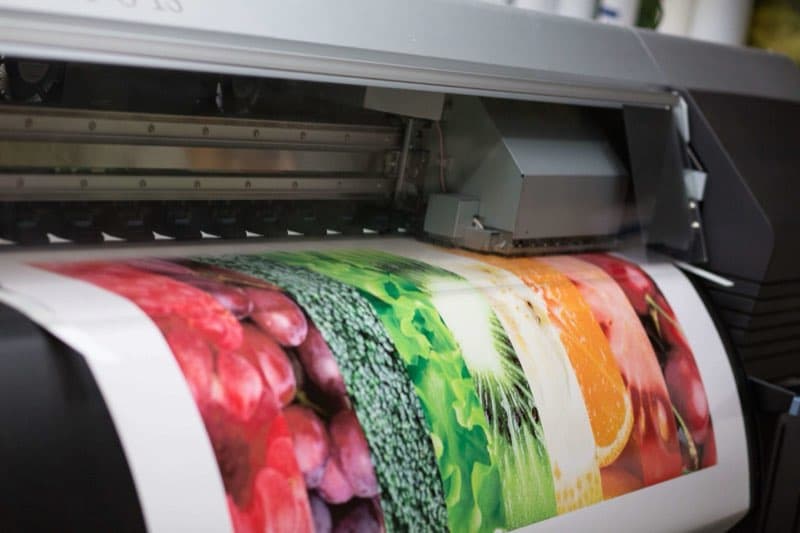
Getting a Useful Large Format Quote
Large format printing encompasses a wide range of products — banners, trade show displays, window graphics, wall murals, floor graphics, posters, and more — and pricing varies significantly based on a long list of variables. A vague inquiry ("I need a banner") will produce a vague estimate. A specific, complete brief will produce a quote you can actually budget and plan around.
Here's exactly what information to have ready when requesting a large format printing quote.
Essential Information for Every Large Format Quote
1. Exact Finished Dimensions
Provide finished width and height in inches or feet. Large format pricing is heavily influenced by square footage — a banner twice the size costs roughly twice as much in substrate and ink, plus potentially more in labor for installation.
If you have a space but haven't confirmed exact dimensions, measure carefully before requesting a quote. A 10% size difference can change your cost meaningfully.
2. Quantity
How many pieces do you need? Large format printing has relatively high setup costs per job (file processing, material handling, finishing), so ordering multiple identical pieces is often more economical per piece than placing separate orders. If you need 3 identical banners, say so — you'll likely get a better per-unit price than if you ordered them one at a time.
3. Substrate / Material
The material your piece prints on is one of the biggest cost drivers in large format. Common options and their applications:
- Vinyl banner (scrim vinyl): Economical, durable, good for outdoor banners. Available in various weights (7 oz to 18 oz).
- Fabric (dye-sub or direct print): Lightweight, wrinkle-resistant, premium appearance. Used for trade show displays, retail environments, and events where fabric look matters.
- Foam board / gatorboard: Rigid, lightweight, ideal for indoor signs, presentations, and temporary displays.
- Coroplast (corrugated plastic): Lightweight rigid substrate for outdoor yard signs and temporary signage.
- Sintra / PVC foam board: Smooth, rigid, good for high-quality indoor displays.
- Aluminum / Dibond: Metal-faced composite panel for durable, premium indoor and outdoor signage.
- Adhesive vinyl: For vehicle wraps, window graphics, and wall graphics. Specify removable or permanent adhesive.
- Canvas: For photographic reproductions and art prints.
- Mesh vinyl: Wind-resistant for outdoor banners where air circulation is needed.
If you're unsure which material is right for your application, describe the environment (indoor/outdoor, duration, installation method) and let your printer advise.
4. Finishing Requirements
Finishing significantly affects cost and usability:
- Hemming and grommets: Banner edges hemmed and grommets installed at corners (and often every 2 feet along edges) for hanging
- Pole pockets: Sewn sleeve at top/bottom for hanging from a pole or rod
- Mounting: Foam board and rigid substrates may need pre-drilled holes or standoff hardware
- Lamination: Gloss, matte, or anti-scratch lamination for durability and appearance
- Cutting: Straight cuts, contour cuts, or die-cuts to custom shapes
5. Indoor vs. Outdoor Use
Outdoor applications require UV-resistant inks and weatherproof substrates. Specify the expected duration: temporary (days), medium-term (weeks to months), or permanent (years). This affects both material and ink selection.
6. File Status
Tell your printer whether you're providing print-ready files or need design work. Print-ready large format files should be supplied at 1/10th scale at 300 dpi (equivalent to 30 dpi at full size — sufficient for large format viewing distances) or at 100% size at 100–150 dpi. If you're building the artwork yourself, our ultimate guide to preparing files for large format printing takes you through scale, resolution, and bleed.
7. Turnaround
Standard turnaround for most large format jobs is 3–5 business days. Rush production (same day, next day, or 2 days) is available at a premium. If your job has a hard deadline (event date, installation date), share that date and let the printer work backward to confirm feasibility.
8. Delivery or Pickup
Large format pieces are bulky and sometimes require special packaging. If you need delivery, specify the delivery address and whether any special handling is required (rolled in a tube, flat-shipped, palletized). If you're picking up, confirm the printer's hours and location.
Questions to Ask When Comparing Quotes
- Is file checking / prepress included in the quote?
- Is a digital proof included, or does the quoted price assume you'll approve based on your supplied file?
- What's the print resolution (dpi at full size)?
- What ink system is used — solvent, latex, UV? (Affects odor, drying time, and indoor/outdoor suitability)
- Is delivery included or billed separately?
Get Your Quote from VSL Print
At VSL Print in Manhattan, we produce large format printing for corporate events, retail environments, trade shows, and everything in between. Our wide-format inkjet presses handle a full range of materials, and our finishing team handles hemming, lamination, and mounting in-house. Event clients often round out the order with event program printing so signage and printed programs arrive together.
To request a quote, gather the information above and reach out directly. The more detail you can provide, the faster and more accurate the quote we can return.
How Ink System Choice Shapes Your Quote
Many buyers focus on substrate and size but overlook the ink system, which affects durability, cost, and even where the finished piece can be installed. The three common large-format ink technologies each have a profile: latex inks are water-based, low-odor, and safe for indoor environments almost immediately, making them a strong default for interior graphics; UV-curable inks cure instantly under lamps, bond to rigid and non-absorbent substrates, and resist fading well, which suits rigid signage and outdoor work; solvent and eco-solvent inks are highly durable outdoors but may need time to outgas before lamination or enclosed use. When you request a quote, mentioning the installation environment lets the printer match the ink system correctly rather than guessing — and avoids surprises like an odor-sensitive lobby graphic printed in a solvent ink.
Don't Forget Installation and Hardware
The printed graphic is often only part of the project. Retractable banner stands, tension-fabric frames, standoff mounts, pole-pocket rods, and grommet hardware all carry their own costs, and some pieces require professional installation — particularly wall murals, window graphics, and vehicle wraps. When you brief a printer, state whether you need the display hardware, whether installation is required, and where the site is. A quote that covers only the print can look cheaper than one that includes everything you actually need to put the piece up.
Frequently Asked Questions
What's the single most important detail for an accurate quote? Exact finished dimensions. Square footage drives large-format pricing, so a confirmed measurement matters more than almost anything else.
Will the printer help me pick a material? Yes. Describe the environment — indoor or outdoor, how long it needs to last, and how it installs — and a good printer will recommend the right substrate and ink.
Is design included in a large-format quote? Not automatically. Specify whether you're supplying print-ready files or need design, since that changes both price and timeline.
A Simple Brief Template That Gets Better Quotes
If you want a fast, accurate, comparable quote, structure your request so the printer doesn't have to come back with questions. Include, in one message: the product (banner, rigid sign, fabric display, window graphic); exact finished dimensions; quantity; intended environment (indoor or outdoor) and how long it needs to last; the substrate if you have a preference, or a description of the use so the printer can recommend one; finishing needs (hemming, grommets, pole pockets, lamination, mounting, contour cut); whether you need display hardware or installation; your file status (print-ready or design needed); your hard deadline and delivery or pickup location. A brief like this turns a vague "how much for a banner?" into a single round-trip quote you can actually budget against — and it lets the printer flag any material or timeline issue before you've committed.
Looking for professional large format printing?
View Large Format PrintingReady to start your print project?
Get a free quote from a NYC commercial printer. Rush turnaround available.