How Does Large Format Printing Work? A Comprehensive Guide
Curious about what happens inside a large format printer? We explain the full process — from file preparation to finished output — in this comprehensive guide.
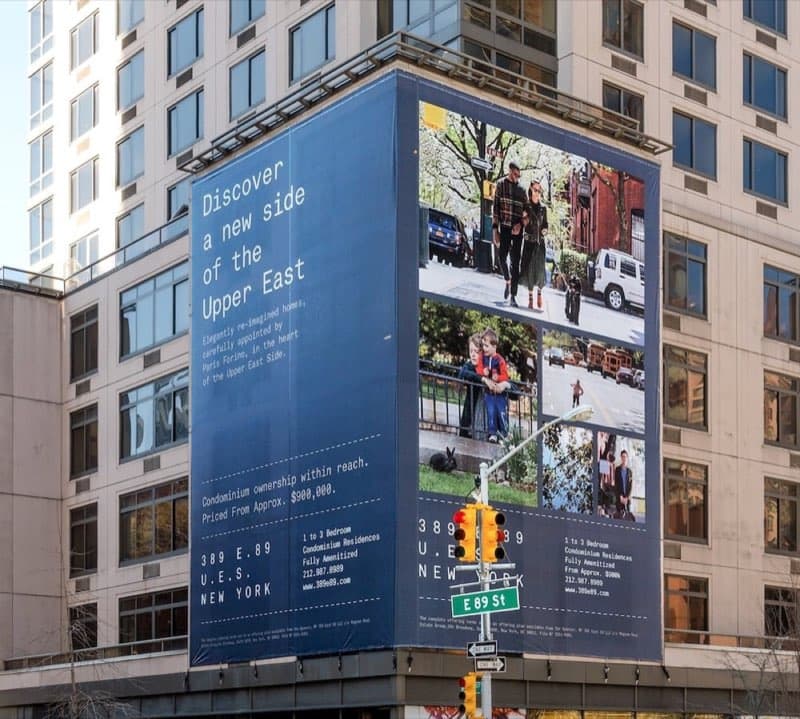
Inside Large Format Printing: The Full Process
Large format printing might look simple from the outside — you submit a file and receive a large printed piece — but the process involves sophisticated technology, careful file processing, and precise color management. At VSL Print in Midtown Manhattan, we've been operating large format equipment since it became a viable commercial production technology. Here is a comprehensive look at how it all works.
Step 1: File Submission and Preflight
Every large format job begins with a digital file. Most clients submit PDF files, though we also accept Adobe Illustrator (AI), EPS, TIFF, and high-resolution JPEG for photographic work. Once we receive your file, our prepress team performs a preflight check, reviewing:
- Image resolution relative to final output size and viewing distance
- Color mode (CMYK vs. RGB)
- Bleed and safety margin presence
- Embedded fonts and linked images
- Document dimensions vs. requested output size
If issues are found, we contact you for revised files or discuss how to resolve them in our prepress workflow.
Step 2: RIP Processing
Once the file passes preflight, it is processed by a RIP (Raster Image Processor) — specialized software that converts your design file into a raster image the printer can output. The RIP performs several critical functions:
- Converts vector artwork and fonts into high-resolution pixel data
- Applies ICC color profiles to translate design colors into the correct ink output values for the specific printer and substrate combination
- Scales the file to the requested output dimensions
- Applies any nesting or tiling configurations for efficient substrate use
Step 3: The Printing Technology — Inkjet
Large format printers use piezoelectric inkjet technology. A printhead — or array of printheads — moves across the substrate on a carriage, depositing tiny droplets of ink with extraordinary precision. The key characteristics:
- Ink droplet size: Modern large format printers can place droplets as small as 2–4 picoliters, enabling very fine detail and smooth gradients.
- Print heads: Multiple printheads lay down CMYK inks simultaneously. Premium machines also include additional ink channels for light cyan, light magenta, orange, green, and other expanded gamut colors.
- Print speed vs. quality: Most large format printers offer multiple quality settings — faster passes at lower resolution for draft/banner work, slower multi-pass printing for fine-art or close-view output.
Step 4: Substrate Handling
Large format printers accommodate roll-fed flexible substrates (vinyl, fabric, paper rolls) and, on flatbed models, rigid substrates (foam core, aluminum, acrylic). Roll-to-roll printing is standard for banners and vinyl graphics. Flatbed printing allows direct printing onto rigid boards without needing to mount printed vinyl.
Step 5: Ink Technology and Durability
Large format printing inks come in several formulations suited to different applications:
- Aqueous inks: Water-based inks ideal for indoor use on coated papers and canvas. Excellent color gamut and detail.
- Solvent inks: Durable inks for outdoor vinyl and banners. UV-resistant and waterproof without lamination.
- UV-curable inks: Cured instantly by UV light, extremely durable, can print on rigid substrates. Available in both flexible and rigid formulations.
- Latex inks: Water-based inks with durability approaching solvent inks, lower VOC emissions, suitable for indoor and outdoor use.
Step 6: Finishing
After printing, large format pieces typically require finishing work:
- Trimming: Cutting to final dimensions using a large-format cutter or plotter.
- Lamination: Applying a protective laminate to extend life, reduce glare, or add texture.
- Grommeting: Adding metal grommets to banner edges for hanging.
- Mounting: Adhering vinyl prints to rigid substrates for displays and presentations.
- Hemming and pole pockets: Sewing fabric edges and creating sleeves for tension displays.
Color Management: From File to Final Output
The reason a large format print can faithfully match a design is disciplined color management. Each printer-and-substrate combination behaves differently — vinyl, fabric, and backlit film all absorb and reflect ink in their own way — so a quality shop builds an ICC profile for each pairing. During RIP processing, that profile translates the design's color values into the precise ink amounts that will reproduce the intended color on that exact material. This is why a printed substrate proof matters: it confirms how your colors will actually land on the material you have chosen, not on a generic paper. For brand colors, supplying Pantone references lets the operator target them as closely as the ink set allows.
Roll-to-Roll vs. Flatbed Printing
Large format work generally runs on one of two machine architectures. Roll-to-roll printers feed flexible media — vinyl, fabric, paper — from one roll, print it, and wind it onto a take-up roll; this is the standard for banners, wall coverings, and adhesive graphics. Flatbed printers hold rigid material stationary on a vacuum bed and pass the printheads over it, printing directly onto foam board, acrylic, aluminum, and other panels without any mounting step. Some hybrid machines do both. Choosing the right architecture is part of how a printer optimizes quality and cost for each job.
Drying, Curing, and Why It Matters
How large format inks set is as important as how they are laid down. Aqueous and latex inks dry by evaporation and, for latex, gentle heat that fuses the ink film to the substrate; this is why latex prints are typically ready to handle and laminate quickly. Solvent inks need outgassing time as the solvent fully evaporates before lamination, or trapped solvent can cloud the laminate later. UV-curable inks cure instantly under UV lamps, forming a tough film the moment they pass the light. Matching ink chemistry to the substrate and the intended finishing — and allowing the right cure or dry time — is what ensures a print does not scuff, fade, or delaminate after it leaves the shop.
Quality Control on the Production Floor
Before a long run proceeds, operators pull a test print to verify color, registration, and detail against the approved proof. They check that the substrate is feeding evenly, that printheads are firing cleanly with no missing nozzles (which can cause faint banding lines), and that ink is curing or drying properly. Catching an issue on a test piece is far cheaper than discovering it after a full run of expensive wide-format material. When the piece is destined for a facade or storefront, the process often extends one step further, into professional sign installation services.
Frequently Asked Questions
What is a RIP, in plain terms? It is the software that converts your design into the exact dot pattern and ink values the printer lays down, while applying scaling and color profiles. It is the bridge between your file and the machine.
Why do droplet sizes matter? Smaller droplets — down to a few picoliters — allow finer detail and smoother gradients. Larger droplets lay ink faster for high-speed, distance-viewed work.
Do I always need lamination? Not always. Many outdoor inks are durable on their own, but lamination adds scuff and UV protection and is recommended for high-traffic or long-life signage.
Seen end to end, large format printing is a chain of carefully coordinated steps — preflight, RIP and color management, precise inkjet deposition, substrate handling, proper curing, quality control, and finishing — each of which contributes to the finished result. Understanding that chain helps you supply better files, choose the right materials, and set realistic expectations, all of which lead to signage that looks the way you intended and holds up in the environment where it lives. If it's the buying decision you're weighing rather than the mechanics, we've written separately about how large format differs from digital.
VSL Print's Large Format Capabilities in Manhattan
Our large format department handles jobs ranging from single-piece event signage to multi-location retail rollouts. With capable large format equipment, experienced operators, and full in-house finishing, VSL Print delivers quality large format work with fast turnaround. Contact us to discuss your project today.
Looking for professional large format printing?
View Large Format PrintingReady to start your print project?
Get a free quote from a NYC commercial printer. Rush turnaround available.